📱 Digital Manager — Behavioral UX
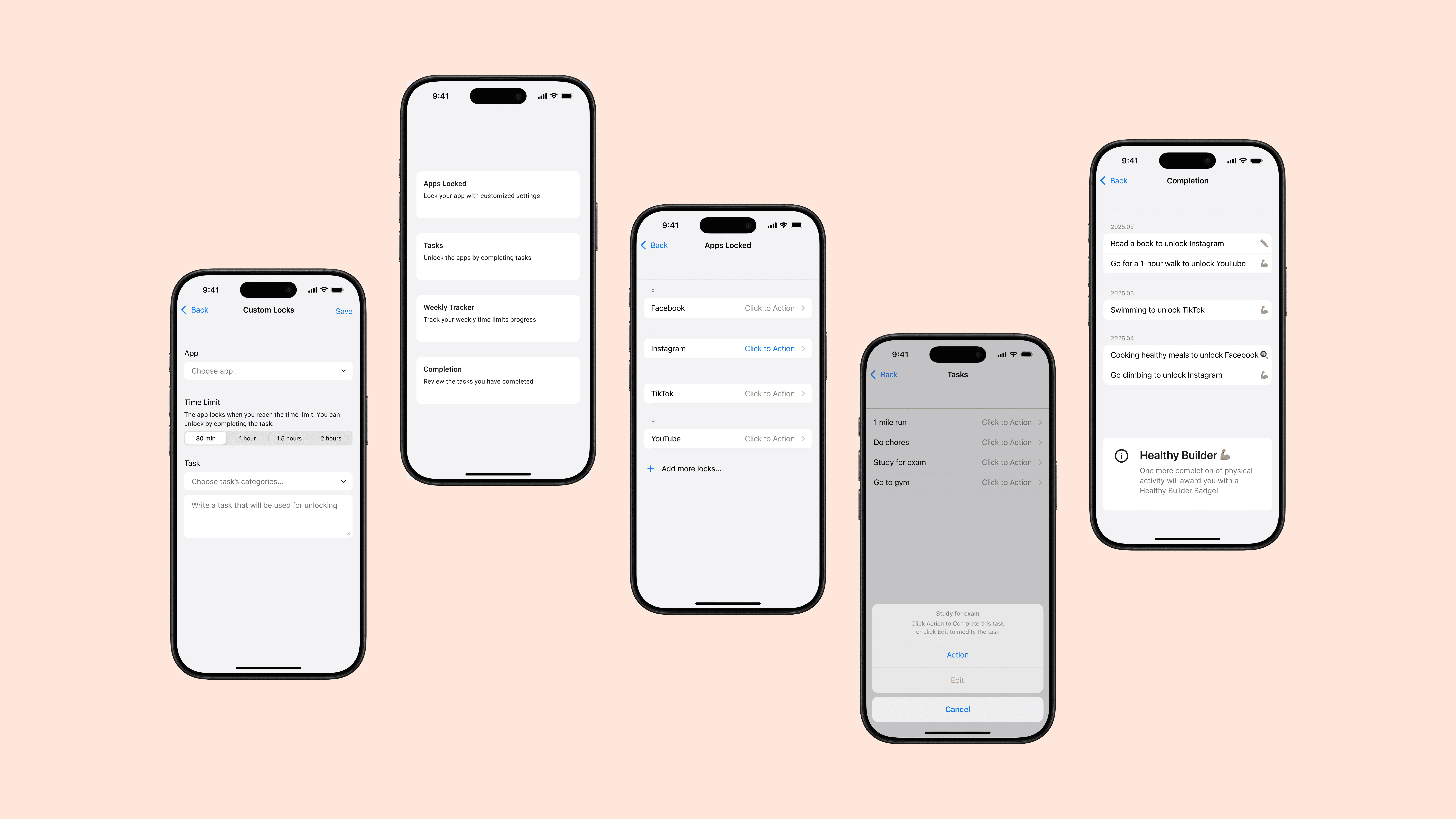
Digital Manager — Behavioral UX for Intentional Decision-Making
Role: UX & Product Design
Scope: User problem framing · Behavior-aware interaction design · Task flow design · Intentional friction · Iterative prototyping
Project Overview
Digital Manager is a behavioral UX project exploring how digital systems can support intentional decision-making around app usage rather than relying on restrictive controls.
Instead of blocking access outright, the experience introduces structured tasks, reflection checkpoints, and clear system feedback before users regain access to locked apps. The project focuses on making moments of re-entry more deliberate and transparent, encouraging users to pause and reflect before acting.
Target Users:
College students and young adults seeking to manage digital habits in a way that supports awareness, autonomy, and self-regulation.
Problem Context
Many productivity and focus tools rely on hard restrictions without helping users understand why they overuse certain apps or how their habits form.
As a result, users often bypass limits without reflection, reducing long-term effectiveness and trust in the system. Tools designed around enforcement alone fail to support awareness, autonomy, or meaningful behavior change.
Users need systems that support self-regulation, not passive compliance.
Design Goal
The goal was to design an experience that helps users pause, reflect, and make more intentional decisions about re-entering distracting apps.
Rather than preventing access, the system focuses on shaping behavior through interaction design—supporting awareness, autonomy, and conscious choice at critical moments.
UX & Interaction Strategy
The experience was designed using the following strategies:
Task-based interaction flows that introduce intentional pause points
Intentional friction to slow users down at moments of impulsive re-entry
Progressive disclosure of actions to reduce decision pressure
Reflection prompts embedded in user flows to encourage awareness
Clear system feedback reinforcing task completion and system state
Each interaction was designed to make system behavior understandable and to encourage deliberate action rather than automatic behavior.
Interaction Flow in Practice
Intended User Outcome
Users become more aware of their digital habits and practice intentional self-regulation when deciding whether to re-enter locked apps.
Core User Interaction
Users select a locked app, complete a required offline task, and confirm completion before regaining access.
System Feedback & Reinforcement
Visual confirmation and progress indicators reinforce task completion and help users understand how the system responds to their actions.
Reflection & Decision Awareness
Reflection prompts encourage users to consider what action they completed and how the process influenced their decision to re-enter the app.
Design Artifacts & Prototypes
Low- and high-fidelity prototypes were developed to test task flows, confirmation patterns, and feedback clarity.
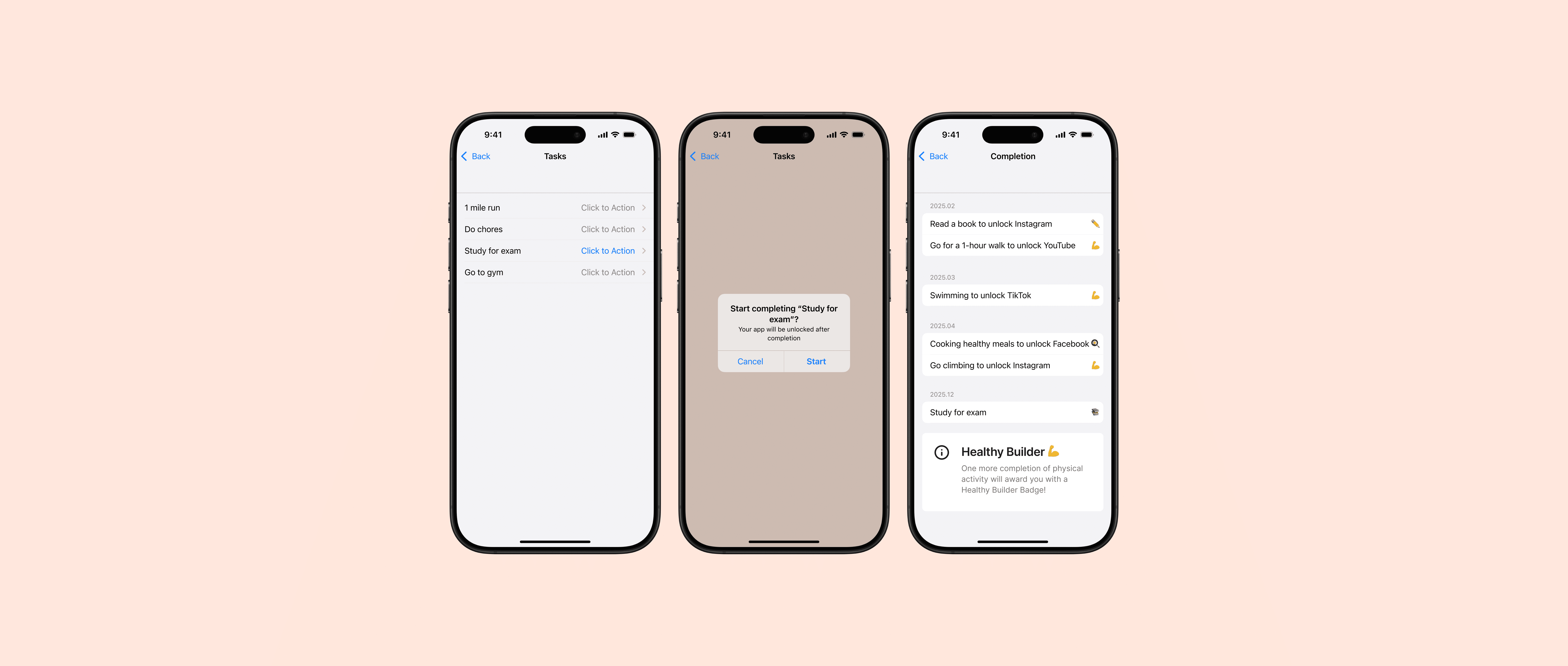
Screens illustrate how task completion and confirmation function as deliberate decision checkpoints rather than simple unlock actions.
Design Impact & Takeaways
This project demonstrates how UX design can support behavior change by embedding intentional decision points directly into everyday interactions.
By shifting the system’s role from enforcement to guidance, the experience balances usability, autonomy, and control—an approach applicable to other behavior-sensitive domains such as focus tools, wellness products, and enterprise systems requiring mindful user engagement.