🎓 GT Thread Solution — Decision Support UX
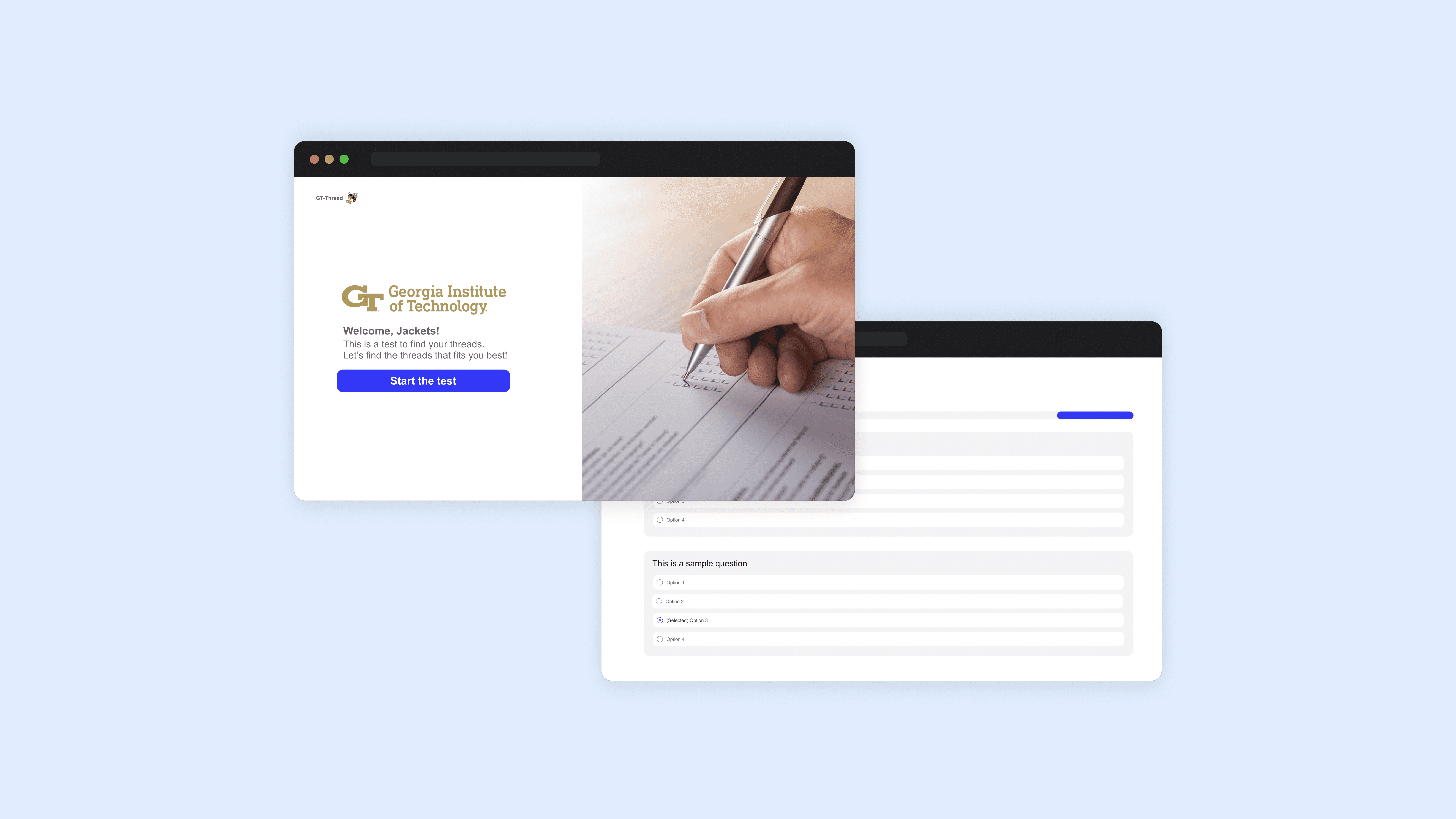
GT Thread Solution — Decision Support UX for Complex Academic Choices
Role: UX & Information Design
Scope: Information architecture · Decision support · Accessibility · Clarity-driven iteration
Project Overview
GT Thread Solution is a decision-support web experience designed to help users navigate complex academic specialization choices within an information-dense environment.
Rather than presenting static resources, the project focuses on structuring information and guiding reflection to support confident, informed decision-making. The experience evolved through multiple design iterations, prioritizing clarity, accessibility, and transparency in system behavior.
Target Users:
Early-stage Computer Science students navigating high-stakes academic decisions with limited prior context.
Problem Context
Selecting an academic specialization requires users to interpret abstract pathways, compare unfamiliar options, and consider long-term implications.
Existing resources were fragmented across multiple sources and relied heavily on self-directed interpretation. This resulted in cognitive overload, uncertainty, and difficulty comparing options—particularly for early-stage users unfamiliar with the structure of the curriculum.
Users needed structured decision support, not more information.
Design Goal
The goal was to design an experience that helps users clarify their interests and receive structured, explainable recommendations that support confident academic decision-making.
The focus was on reducing cognitive load and making the system’s logic understandable rather than optimizing for speed or efficiency.
UX & Information Strategy
The experience was designed using the following strategies:
Structured, survey-based questioning to surface user priorities and interests
Progressive disclosure to manage information density and reduce overwhelm
Iterative interface redesigns focused on clarity and readability
Visual summaries and explanations to make recommendation outcomes transparent
Design iterations prioritized approachability and reflection, framing decision-making as a guided process rather than a single moment of choice.
Decision-Support Interaction Flow
This project applies UX and information design principles across the full decision-support experience rather than functioning as a standalone educational module.
Intended User Outcome
Users gain clarity about their academic interests and understand how different specialization options align with those interests.
Core User Interaction
Users answer a series of structured questions and receive ranked specialization recommendations based on their responses.
System Feedback & Explanation
Results pages summarize outcomes and provide contextual explanations for each recommendation, helping users understand why certain options were suggested.
Reflection & Confidence Building
Reflection prompts encourage users to evaluate alignment, question assumptions, and engage more intentionally with their decision.
Design Artifacts & Prototypes
The project includes initial wireframes, a first redesign, and a final redesign informed by usability feedback and clarity considerations.
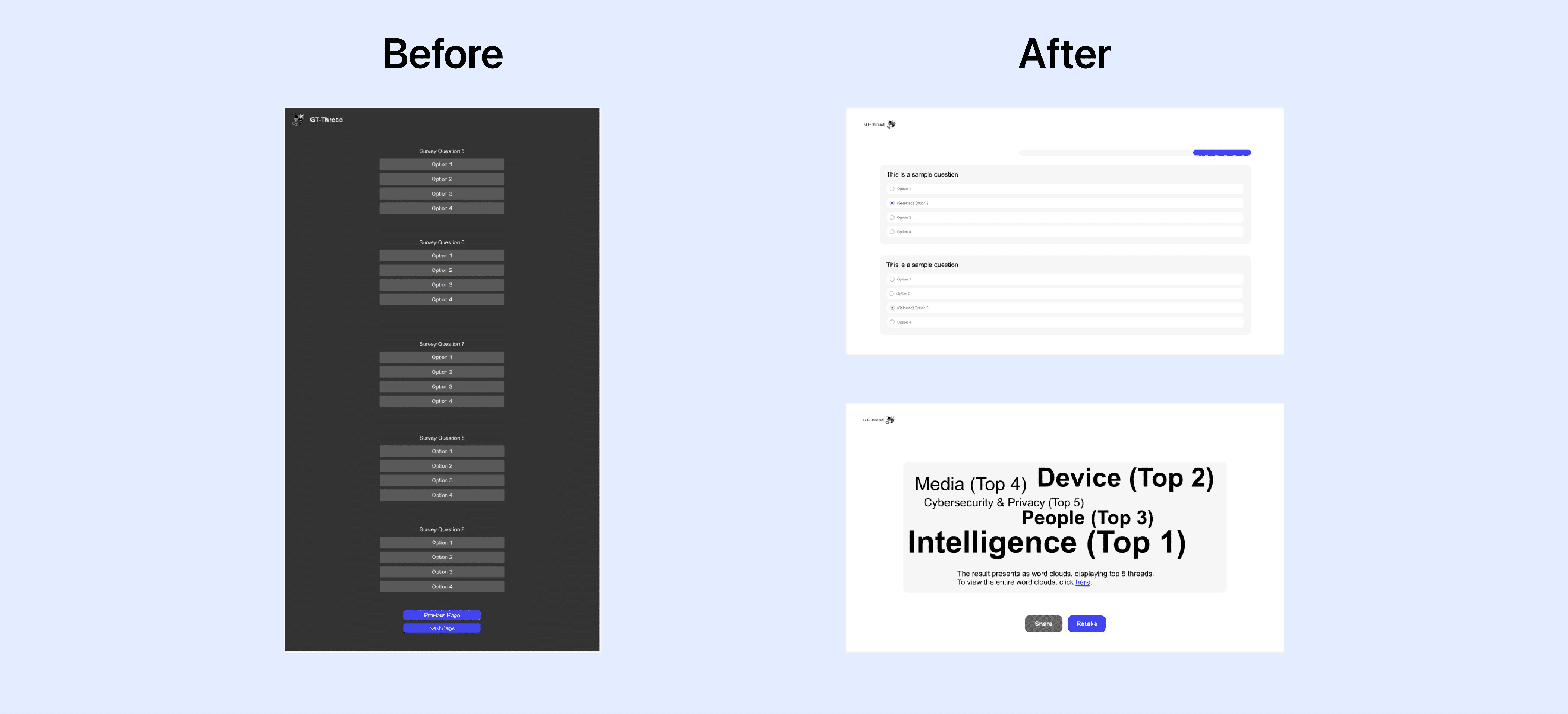
Before-and-after comparisons illustrate how the interface was refined to reduce cognitive load, improve information hierarchy, and support guided decision-making.
Design Impact & Takeaways
This project demonstrates how thoughtful information architecture and interaction design can transform complex, high-stakes decisions into structured and confidence-building experiences.
By prioritizing clarity, transparency, and user reflection, the system supports informed decision-making without overwhelming users—an approach applicable to other decision-heavy domains such as academic advising, career exploration, and enterprise tools.